
Junior Academy of Sciences
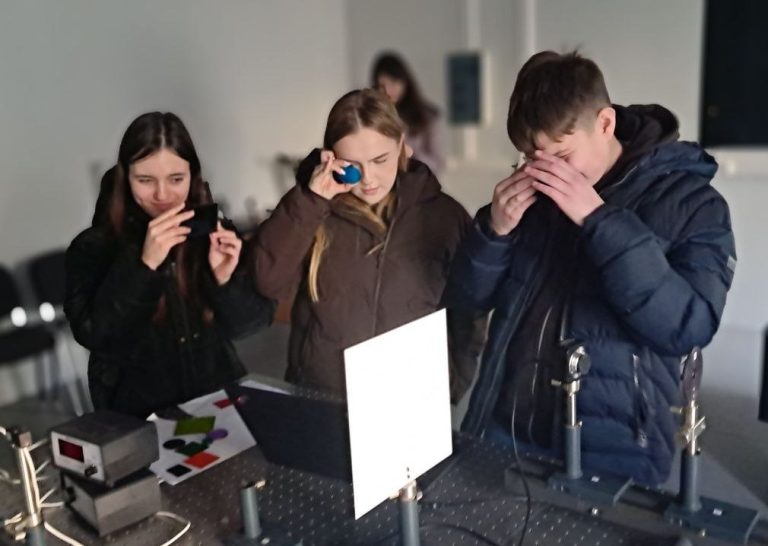
Want to try yourself in research before entering university? The Junior Academy of Sciences (MAN) offers a real research project supervised by a scientist of the department for students of grades 8–11: from posing the problem to defending it at the MAN competition.
What MAN at the department is
A project usually takes 4–8 months: a topic, the research, writing up and the defence at the MAN competition. Meetings with the supervisor – roughly once every one to two weeks during the school year.
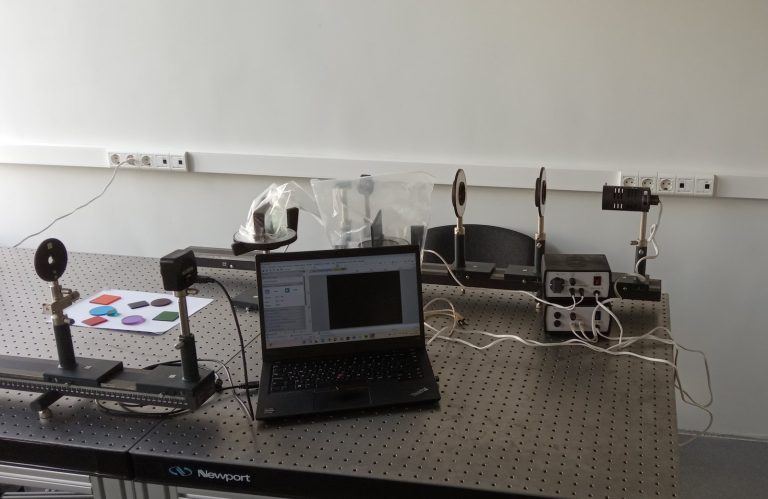
The result is not an essay but your own contribution: processed data, a refined method, and sometimes a working software tool built with your own hands.
Research directions
Examples of research topics
The supervisor
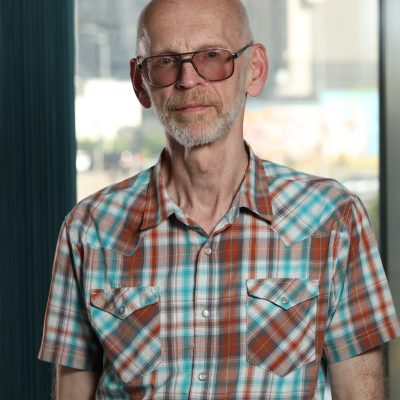
Andrii Yakunov – Candidate of Physical and Mathematical Sciences, associate professor at the Department of Optics. Research interests – optics of inhomogeneous media and biomedical optics; a separate line of work is science outreach with school students. He invites students of grades 8–11.
To get a feel for the supervisor’s way of thinking – a short popular science article by Andrii Yakunov, “The emergence of coherent oscillations in living systems” (PDF, 3 pages, in Ukrainian): how coherent oscillations, familiar to opticians from lasers, arise in the microtubules of a living cell.
More to read: Andrii Yakunov’s articles in Kraina Znan
Kraina Znan, a popular science magazine for school students, has been publishing the supervisor’s articles since 2008 – here are eight of them and one author’s version for advanced readers; all in Ukrainian.
- A tsunami in a protein molecule – Kraina Znan No. 4, 2009 (PDF, 4 pp., in Ukrainian) – how the energy of ATP travels along a protein without loss: Davydov solitons.
- Does biological superconductivity exist? – part 1 (Kraina Znan No. 2–3, 2010; PDF, 3 pp.) and part 2 (No. 6, 2010; PDF, 4 pp.) – from Kamerlingh Onnes to the question of whether superconductivity occurs in living matter; in Ukrainian.
- Why does light heal? Or, the paradoxes of laser biostimulation – Kraina Znan No. 9–10, 2010 (PDF, 7 pp., in Ukrainian) – from Finsen to lasers: what a beam can really do.
- Terra incognita of the electromagnetic spectrum – Kraina Znan No. 6, 2011 (PDF, 5 pp., in Ukrainian) – millimetre waves: the least explored part of the spectrum.
- What does electromagnetic ecology study? Or, why mobile-phone radiation may be harmful (part 2) – Kraina Znan No. 7, 2012 (PDF, 3 pp., in Ukrainian) – spectra, digital noise and why “harmfulness” has to be calculated.
- Quantum mechanics of blood – Kraina Znan No. 3–4, 2013 (PDF, 4 pp., in Ukrainian) – Rowlands, red blood cells and the magnetic field.
- The magic string of Fermi–Pasta–Ulam – Kraina Znan No. 4–5, 2014 (PDF, 5 pp., in Ukrainian) – the magic gusli and the Fermi–Pasta–Ulam problem.
- Coherence in the living world revisited (for advanced readers) – author’s version; a sequel to the 2008 article (PDF, 5 pp., in Ukrainian) – the Fröhlich model with equations and three problems for independent research.
Student achievements
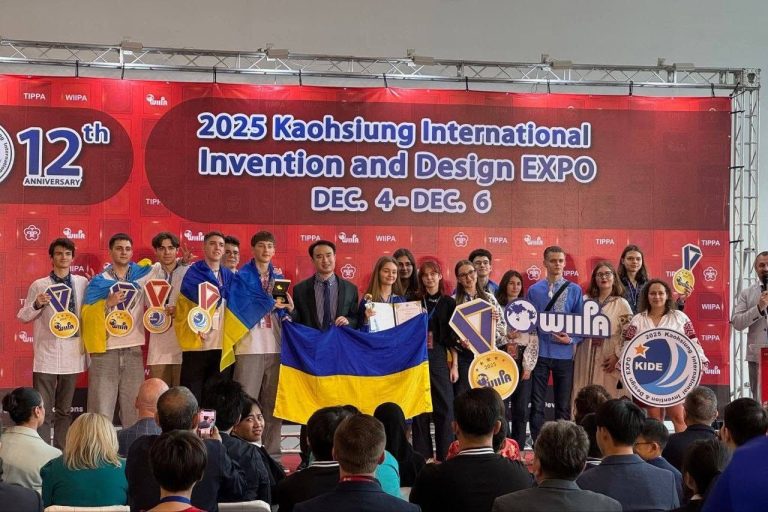
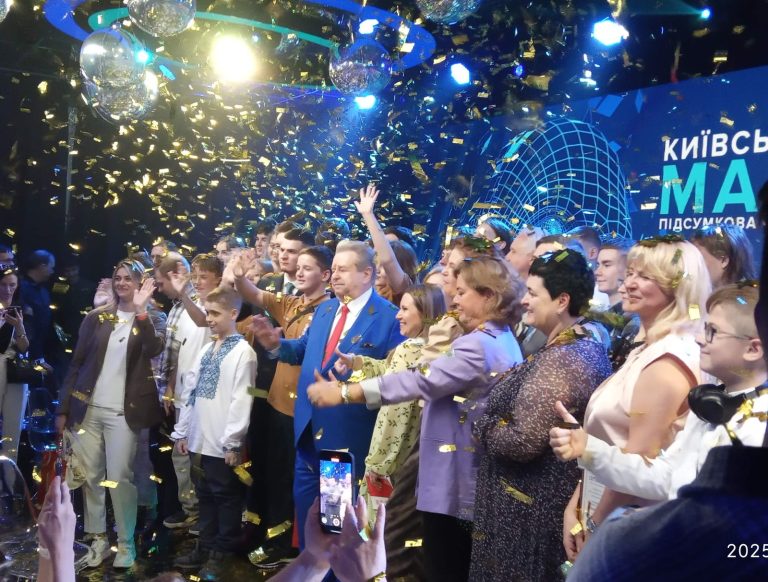
Students who started with MAN at the department already have prizes at the national stage of the physics competition, a talk at the SPO international conference and a place at an international invention exhibition.
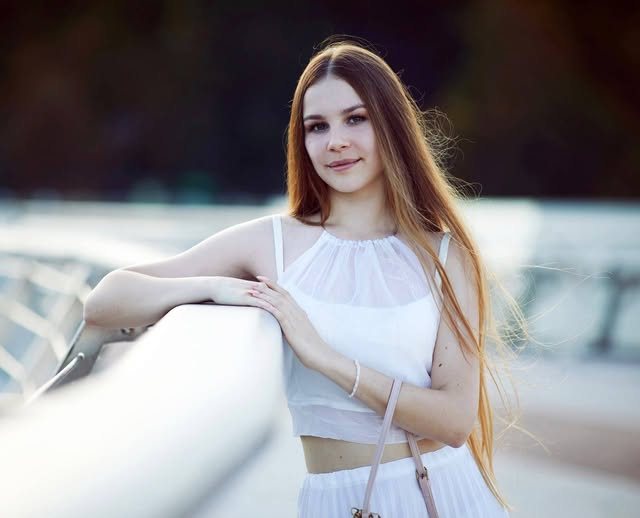
Mariia Kasianchuk – 2nd place at the national stage of the MAN physics competition (2022). Now a first-year master’s student at the Department of Optics, KNU.
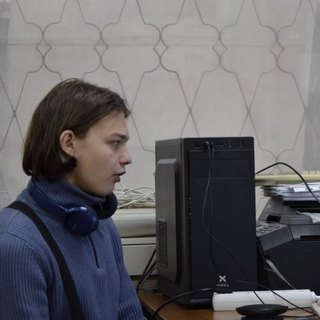
Artem Sachko – winner of the national stage of the MAN physics competition (2025). He presented his work at the SPO-2025 international conference and represented Ukraine at the Kaohsiung International Invention and Design EXPO (KIDE 2025, Taiwan).
How to join
- ApplyWrite to us via the contact form – no prior preparation is usually needed.
- Get a supervisorThe department will match a supervisor to your interests.
- Agree the topic and planAt the introductory meeting you agree on the topic and the work plan.
- Work regularlyMeetings with the supervisor – roughly once every one to two weeks during the school year.
- Defend the projectWriting up the project and defending it at the MAN competition.
Consultations for physics teachers
Supervising a student’s MAN project in physics or optics and in need of expert advice? The department’s researchers hold free online consultations for teachers from other cities who guide student research projects on their own.
The format is a one-off consultation of up to 30–40 minutes: discussing the method, the soundness of the approach, the interpretation of results. Send the student’s materials in advance.
Consultations are available throughout the school year. Applications are answered within a week.
Frequently asked questions
 Do I need to know how to program?
Do I need to know how to program?
No – for most directions it is not required. For the plugin development topic, basic programming skills are an advantage but not a requirement at the start.
How much time does it take per week?
How much time does it take per week?
Roughly 2–4 hours a week, including the meeting with the supervisor.
Can it be combined with NMT preparation?
Can it be combined with NMT preparation?
Yes, the format is flexible and agreed individually.
Questions left? Write to us →